Glass formation is usually viewed in terms of physical vitrification: a liquid in a metastable state is cooled or compressed so as to avoid crystallization. However, glasses may also be formed by chemical vitrification, a process involving progressive polymerization of the constituent molecules via the formation of irreversible chemical bonds. The formation of most of the materials used in engineering plastics and the hardening of natural and synthetic resins are based on chemical vitrification. Despite the differences in the molecular processes involved in chemical and physical vitrification, surprising similarities are observed in the slowing down of the dynamics and in the thermodynamical properties of the resulting glasses. Explaining such similarities would improve general understanding of the glass transition and may disclose its universal nature. Here we report dielectric and photon-correlation measurements that reveal the origin of the similarity in the dynamical behaviour of physical and chemical glass formers. We find that the evolution of their configurational restrictions proceeds in a similar manner. In particular, we make a connection between the reduction in configurational entropy and the number of chemical bonds, a quantity that can be controlled in experiments.
SILVIA- COREZZI*, DANIELE- FIORETTO* & PIERANGELO- ROLLA”
*- Istituto Nazionale per la Fisica della Materia and Dipartimento di Fisica, Università di Perugia, Via A. Pascoli, I-06123, Perugia, Italy
” - Istituto Nazionale per la Fisica della Materia and Dipartimento di Fisica, Università di Pisa, Via F. Buonarroti 2, I-56127, Pisa, Italy
Correspondence and requests for materials should be addressed to S.C. (e-mail: Silvia.Corezzi@fisica.unipg.it).
Articoli Correlati


Ultimi Articoli

Youth and Future a Palazzo Reale: le parole dei giovani diventano opere d’arte

Fibra ottica in provincia di Como: 145 comuni nel Piano Bul, oltre 144.000 immobili attivabili

Leone, il neonato ritrovato a Cinisello Balsamo respira senza supporto

Gaza, dalla Lombardia altri 150mila euro per acqua e assistenza agli sfollati
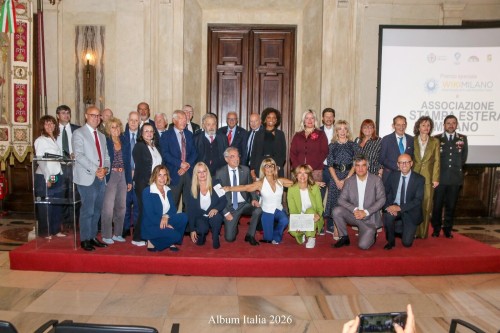
Milano premia i suoi protagonisti: a Palazzo Marino otto “Volti della Metropoli” che raccontano il futuro della città
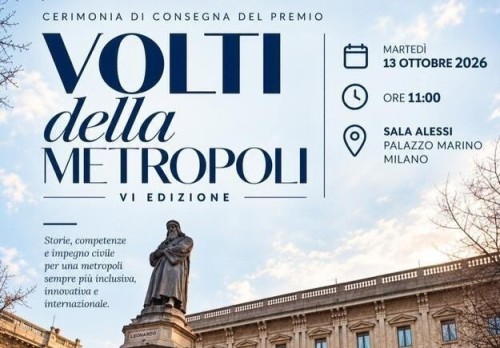
Premio Volti della Metropoli: a Palazzo Marino i riconoscimenti alla VI edizione
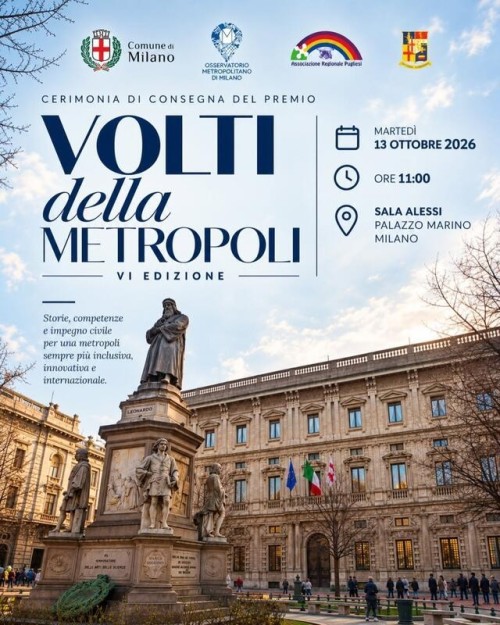
Milano celebra i suoi protagonisti: torna il Premio “Volti della Metropoli”
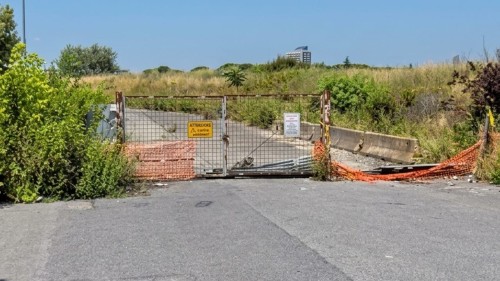
Roma, talenti, Via Antamoro, vent’anni di attesa: ma chi paga il prezzo delle promesse rimaste sulla carta?
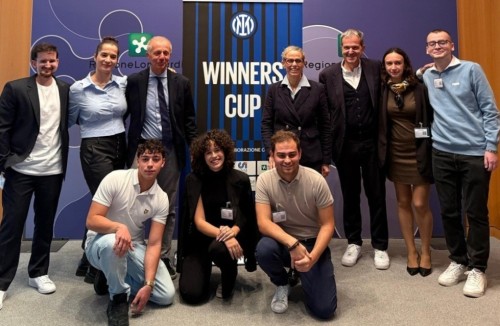
Winners Cup 2026, oltre 200 giovani pazienti oncologici in campo a Milano